


Why Safe Zones in Postremo Limine Are Not Really Safe
Safe Zones in Postremo Limine protect survivors from anomalies, Echo Bleed, and unstable Nodes, but safety does not always mean trust, peace, total protection, or permanence.
In a world built from broken places, unstable routes, shifting laws, and things that should not exist, Safe Zones give people something rare: a place to breathe. They are shelters, hubs, settlements, sealed rooms, protected camps, faction-controlled territories, or temporary pockets of stability where reality is not actively trying to tear itself apart.
But in Postremo Limine, “safe” is never the same as “secure.”
A Safe Zone can protect someone from what waits outside, while still hiding danger within. It can give survivors a place to rest while also becoming a place of control, debt, conflict, or betrayal. It can feel peaceful one day and collapse the next.
That tension is the reason Safe Zones exist in the world of Vestige Soul.
Safe Zones Are Pockets of Stability, Not Safe Worlds
When I started building Postremo Limine, I did not want entire Nodes to be safe.
If a whole Node became safe, it would remove too much of the tension from the setting. Postremo Limine is supposed to feel unstable. It is a world where places can shift, repeat, decay, or become contaminated by memories and emotional residue. Making an entire Node safe would make the danger feel too easy to separate from the rest of the world.
Instead, Safe Zones work more like protected pockets inside dangerous spaces.
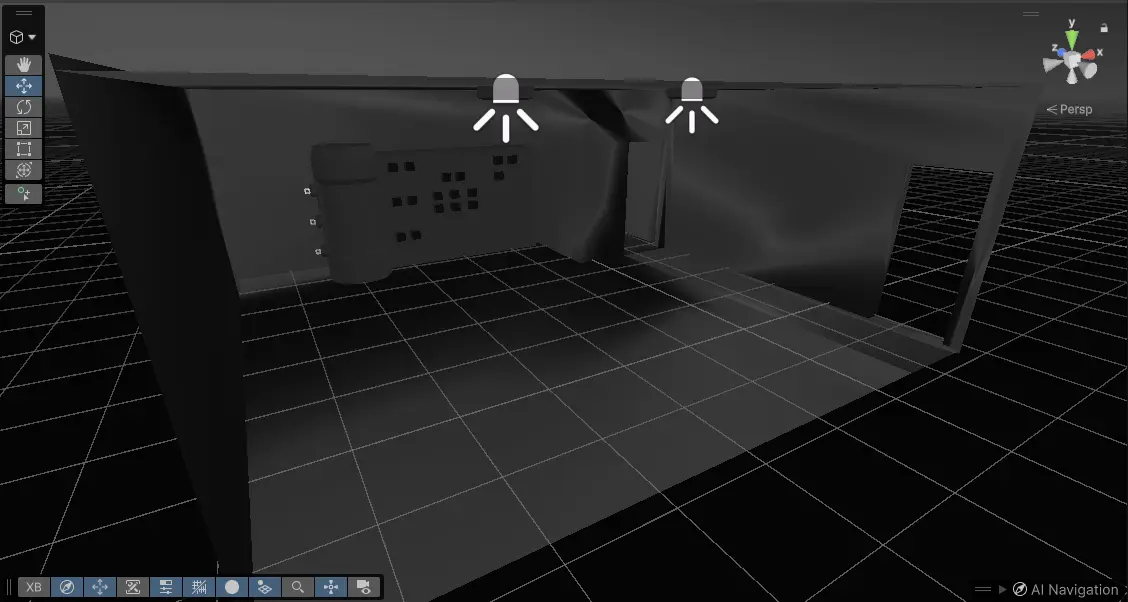
A Node can have a guarded settlement, a sealed shelter, a powered barrier, a stable room, a faction-run hub, or a hidden refuge while the rest of the Node remains hostile. This gives each location more variation. One part of a Node may be survivable. Another part may be warped beyond recognition. A road may be safe during one cycle and deadly during another. A shelter may hold for years, or only for a few hours.
That makes the world less simple.
A place in Postremo Limine is not just “safe” or “dangerous.” It can be both depending on where you are, who controls the area, what systems are protecting it, and how long those systems can last.
What Safe Zones Protect Against
The basic purpose of a Safe Zone is to suppress or reduce the dangers that make Postremo Limine so difficult to survive.
A stable Safe Zone may protect against:
- Anomaly intrusion
- Echo Bleed
- spatial decay
- unstable Node behavior
- environmental distortion
- hostile entities
- dangerous route shifts
- memory contamination
This does not mean nothing bad can happen inside one. It only means the worst forces of Postremo Limine are being held back.
That protection can come from different sources. Some Safe Zones are maintained by LimiCore-powered systems, Limi-Anchors, barriers, relic infrastructure, old protocols, faction control, or other stabilizing forces. Others may exist because something in the Node itself has not fully collapsed yet.
No matter how they form, Safe Zones are important because they give survivors a chance to recover.
They are where people sleep, trade, heal, gather information, repair gear, recruit allies, hide from entities, and prepare for the next route. Without Safe Zones, survival in Postremo Limine would become almost impossible for most people.
But that importance also makes them dangerous.
Safe Does Not Mean Trustworthy
A Safe Zone can protect someone from anomalies and still be controlled by people who should not be trusted.
That is one of the main reasons I wanted Safe Zones to matter in the story. They are not only physical shelters. They are social and political spaces.
If a place has food, power, shelter, maps, information, medical help, trade routes, or protection, people will want to control it. A Safe Zone can become a hub for survivors, but it can also become a fortress, a market, a prison, a religious center, a military outpost, or a place where factions decide who gets to live comfortably and who gets pushed back outside.
That creates conflict.
A faction may claim it is protecting a Safe Zone while secretly using it for experiments. A leader may use the threat of the outside world to keep people obedient. A market may offer safety only to those who can pay. A sanctuary may look peaceful while hiding something rotten under the surface.
In that sense, Safe Zones create one of the most important questions in Postremo Limine:
Is it better to face the monsters outside, or trust the people inside?
Why Safe Zones Become Hubs
Safe Zones are also useful because they naturally become meeting points.
In a dangerous world, stable places attract people. Divers, survivors, merchants, factions, refugees, scouts, and information brokers all have reasons to gather there. This makes Safe Zones good locations for character interaction and story development.
They allow characters to:
- rest after dangerous Node travel
- meet allies or enemies
- discover rumors
- trade supplies
- learn about other routes
- encounter factions
- recover from injuries
- uncover hidden problems
- prepare for the next major threat
This gives the story room to breathe.
If every scene happened in a hostile area, the world would become exhausting. Safe Zones create contrast. They make the dangerous parts feel more dangerous because the characters briefly remember what stability feels like.
But that comfort is temporary.
The moment a Safe Zone becomes important, it also becomes a target.
Safe Zones Can Be Attacked, Infiltrated, or Destroyed
Safe Zones are not permanent by default.
They can be damaged, sabotaged, infiltrated, corrupted, abandoned, or destroyed. Their barriers can weaken. Their LimiCore systems can fail. Their anchors can be overloaded. Their protectors can be killed. Their rules can be twisted. Their leaders can lie.
Sometimes the danger comes from outside. An entity may find a way in. An anomaly may press against the edges. A Node may shift and swallow the protection around the zone.
Other times, the danger comes from within.
A faction may betray the people it claims to protect. A hidden system may require a cost no one understands. A Safe Zone may slowly become a False Zone. The residents may not realize the shelter has already started to change.
This fits one of the core ideas of Postremo Limine:
Nothing stays the same forever.
Even safety can decay.
Why I Did Not Want Safe Zones to Feel Too Comfortable
The most basic function of a Safe Zone is to give people a place to rest and feel safe, even for a moment.
That moment matters.
Characters need places where they can lower their guard, talk, recover, argue, plan, and remember why survival is worth it. Readers also need those spaces because they make the world feel lived-in instead of only dangerous.
But I never wanted Safe Zones to feel like perfect havens.
Postremo Limine is a world where stability is fragile. A Safe Zone should feel useful, but not absolute. It should make characters feel relief without letting them fully forget where they are.
That balance is important. If Safe Zones were too safe, they would weaken the horror and survival elements of the setting. If they were never safe at all, then the word would lose meaning.
The goal is to make them feel like temporary promises.
They are places where the world says, “You can breathe here.”
But Postremo Limine never promises for how long.
What Safe Zones Add to Vestige Soul Lore
Safe Zones help connect many parts of Vestige Soul lore together.
They connect to Nodes because they create stable areas inside unstable locations. They connect to Echo Bleed because they help suppress memory contamination and emotional residue. They connect to LimiCore and Limi-Anchors because those systems can help stabilize reality. They connect to factions because any place worth protecting is also worth controlling.
They also support the main story by giving characters places to gather, recover, and face problems that are not only physical.
A monster outside the walls is one kind of threat.
A leader inside the walls deciding who deserves protection is another.
That is why Safe Zones are not really safe. They are necessary, but they are not pure. They protect people from some dangers while creating new ones. They give survivors a place to rest, but they also become centers of power, conflict, fear, and change.
In Postremo Limine, safety is not the end of danger.
Sometimes, it is where the next danger begins.
Related Lore Entries
To learn more about how Safe Zones connect to the world of Vestige Soul, explore these related lore entries:
Postremo Limine more like a safe room in Left 4 Dead or a village in Blame! Movie which has a shield generator that protects them, or maybe closer to Is It Wrong to Try to Pick Up Girls in a Dungeon? safety floors. This way, most nodes can have safe areas and non-safe areas along with more variations.
This also makes Safe Zones a hub for characters in more central ideas, and allows them to be controlled by a faction or group. This will cause conflict among groups. This also makes safe zones a target. Overall, all stories involve them unless the story is about before the time of Limicore.
Safe zones can be infiltrated or destroyed just like the village in Blame! Movie. It also goes with one of the core ideas of Postremo Limine that things do not stay the same.
The most basic function of a safe zone is to give people a place to rest and feel safe, even for a moment.